

Select publications from my lab with my summaries.
Check out my links for more publications on which I’m an author.
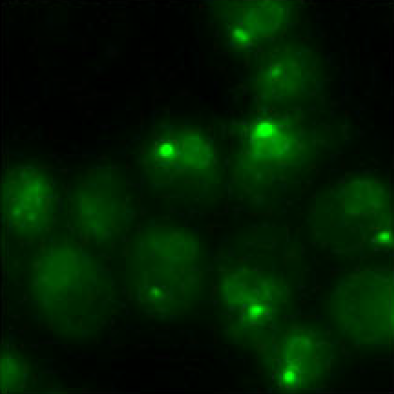
Dsk2 is a yeast protein that contains small domains interspersed with disordered segments, including regions with low complexity. In vitro (NMR, phase transition experiments), we found that the yeast protein Dsk2 contains small transient helices in its disordered regions and that these, along with its STI1 domain, contribute to Dsk2’s liquid-liquid phase separation more than its other domains. However, in vivo, determining the relative contributions of Dsk2’s domains and disordered regions was more complicated, as there were pleiotropic effects with deleting the STI1 domain or the three transient helices. Ultimately, we showed that the STI1 domain likely facilitates the degradation of proteins via the proteasome even without exogenous stress, and its deletion increased proteasome condensate formation in yeast via greater accumulation of polyubiquitinated material available for condensation with proteasomes. My current studies are exploring more deeply the role of the STI1 domain of Dsk2 in proteostasis.
Waite, K.A., Vontz, G., Lee, S.Y., Roelofs, J., 2024. Proteasome condensate formation is driven by multivalent interactions with shuttle factors and ubiquitin chains. Proceedings of the National Academy of Sciences 121, e2310756121. https://doi.org/10.1073/pnas.2310756121

Nirbhik Acharya, Emily A Daniel, Thuy P Dao, Jessica K Niblo, Erin O Mulvey, Shahar Sukenik, Daniel A Kraut, Jeroen Roelofs & Carlos A Castañeda, 2026. STI1 domain engages transient helices to mediate Dsk2 phase separation and proteasome condensation. The EMBO Journal 45, 2712–2738.
https://pubmed.ncbi.nlm.nih.gov/41673446/
Pictured: GFP-tagged proteasomes in live yeast cells show proteasome condensation (bright puncta) after mitochondrial inhibition stress.
Summary: This work establishes or suggests three things: (1) Proteasome condensates in yeast may differ in constituent proteins and properties depending on the stress that induces them (variations of carbon starvation). (2) Some conditions form condensates that depend on shuttle factors Rad23 (human homologs: RAD23A and B) or Dsk2 (human homologs: hPlic-1, UBQLN). (3) Ubiquitin chains, rather than monoubiquitin, are likely key components of proteasome granules as they may allow for multivalent interactions among condensate components.
Copyright mine. Some of these are available on BioIcons (often with a CC-0 license). Otherwise, ask permission before use.
Digital Artworks
Proteasome condensate WIP (made in Blender). 2024
Nephron_2d (made in Illustrator); Available at BioIcons.com 2024

Cystic mouse kidney, sagittal. (made in Illustrator); Available at BioIcons.com 2024
